Imagine receiving a phone call from someone claiming to be a police officer, tax official, cybercrime investigator, or government agent.
They tell you there’s a warrant for your arrest.
Your bank accounts are under investigation.
Your Aadhaar, PAN, Social Security Number, or identity has been linked to criminal activity.
And unless you act immediately, you’ll face legal action.
If that sounds alarming, that’s exactly the point.
Welcome to the world of government impersonation scams — one of the fastest-growing forms of fraud affecting people across India, the United States, and many other countries.
In this fraud alert, we’ll explain how these scams work, how to perform a quick scam check, and what to do if you’re targeted.
What Is a Government Impersonation Scam?
A government impersonation scam occurs when fraudsters pretend to represent a government agency, law enforcement department, tax authority, or regulatory body.
Their goal is simple:
- Steal money
- Obtain personal information
- Gain access to bank accounts
- Create fear and urgency that causes victims to act without thinking
Scammers may impersonate:
In India
- Police
- CBI
- ED (Enforcement Directorate)
- Income Tax Department
- Cyber Crime Department
- Customs Officials
- Telecom Regulatory Authorities
- Aadhaar or PAN verification teams
In the United States
- FBI
- IRS
- Social Security Administration
- Secret Service
- Local law enforcement
- Courts and government agencies
The tactics vary, but the psychology remains the same: fear, authority, and urgency.
SPONSORED
How Government Scams Typically Work
Step 1: Unexpected Contact
Victims receive:
- Phone calls
- SMS messages
- WhatsApp messages
- Emails
- Social media messages
The scammer may spoof official phone numbers, making the communication appear legitimate.
Verify Suspicious Messages Before Responding
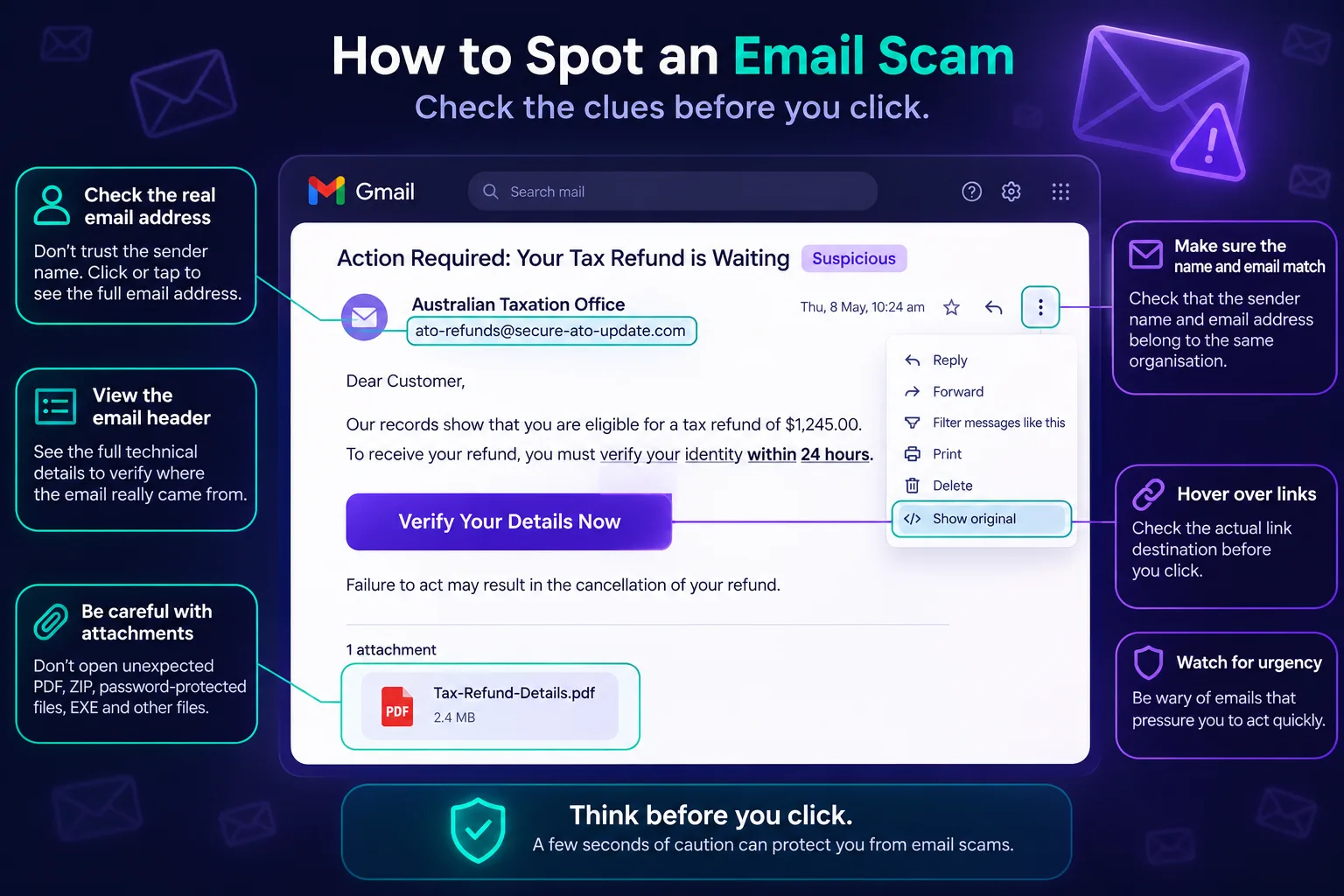
If you’ve received a message claiming to be from a government agency, perform a scam check before taking action. Scammers frequently impersonate police departments, tax authorities, cybercrime units, and government agencies through SMS, WhatsApp, and email.
Useful tools:
- Message Checker – Analyze suspicious texts, emails, and WhatsApp messages
- URL Checker – Verify links included in government notices or payment requests
Step 2: A Serious Accusation
The scammer claims:
- Your identity was used in a crime
- A parcel containing illegal items was intercepted
- Your Aadhaar or Social Security Number has been compromised
- Your bank account is linked to money laundering
- A tax investigation has been launched
- A warrant has been issued in your name
These claims are designed to trigger panic.
Step 3: Urgency and Isolation
Victims are often instructed:
- Not to tell family members
- Not to contact their bank
- Not to speak with local authorities
The scammer wants complete control of the situation.
Step 4: Demand for Money or Information
The fraudster may demand:
- Wire transfers
- Cryptocurrency payments
- Gift cards
- Gold purchases
- Transfers to “safe” accounts
- Banking credentials
- OTPs and verification codes
This is where financial losses occur.
The Rise of Digital Arrest Scams in India
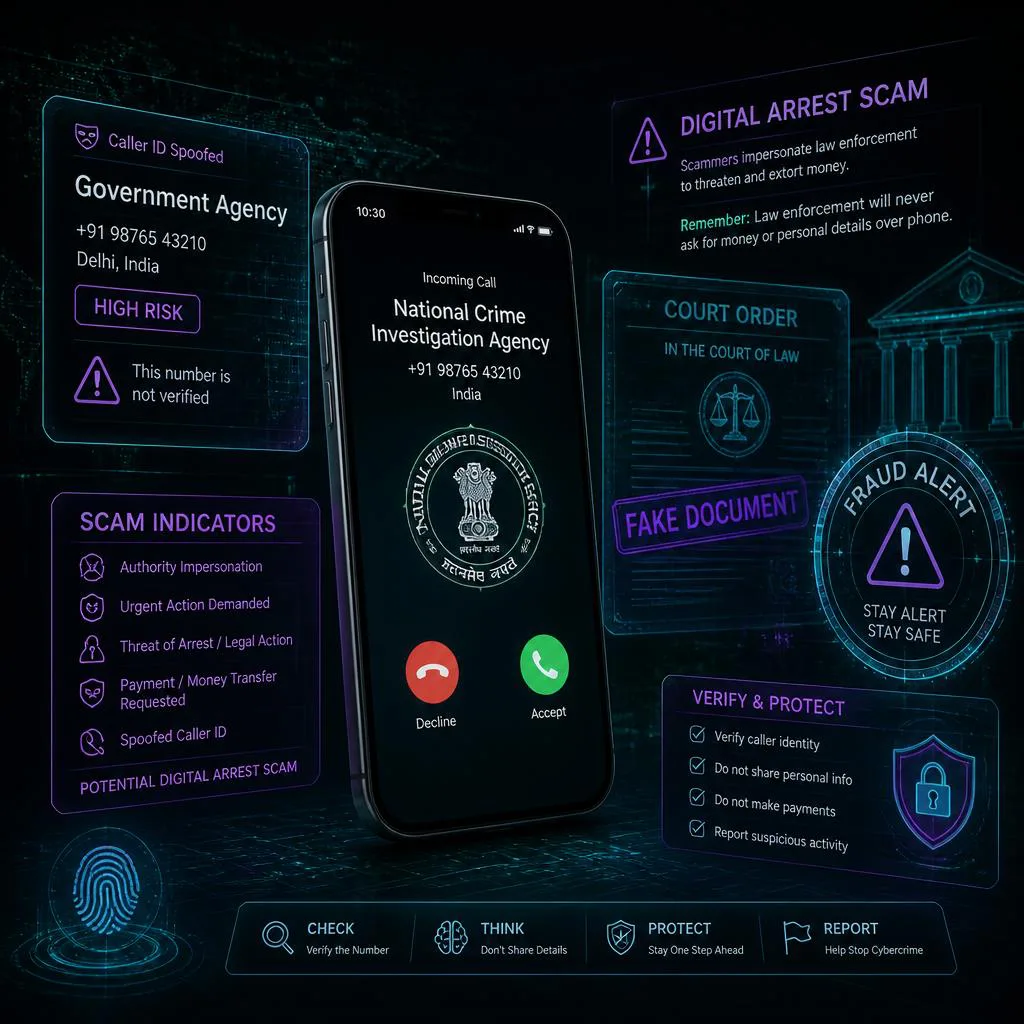
One particularly dangerous trend in India is the so-called “digital arrest scam.”
Victims receive calls from fake police officers, cybercrime officials, or investigators claiming they are under investigation.
The victim may be kept on video calls for hours while being pressured to transfer funds for “verification” or “security purposes.”
These scams have resulted in losses ranging from thousands to crores of rupees across India.
The key thing to remember:
No legitimate government agency conducts investigations through WhatsApp calls or demands payments to avoid arrest.
Scam Check: Red Flags That Expose Government Scams
Before responding to any government-related communication, perform a quick scam check.
Red Flag #1: Immediate Payment Demands
Government agencies do not demand instant payments over the phone.
Red Flag #2: Threats of Arrest
Legitimate authorities do not threaten arrest via phone calls, SMS, or WhatsApp messages.
Red Flag #3: Requests for Cryptocurrency or Gift Cards
This is almost always a scam.
Red Flag #4: Requests for OTPs or Banking Credentials
No legitimate government department needs your banking passwords or OTPs.
Red Flag #5: Pressure to Keep the Matter Secret
Scammers often tell victims not to speak with family, banks, or lawyers.
This is a major warning sign.
How to Protect Yourself
Verify Independently
Never trust contact information provided by the caller.
Use official government websites and verified contact numbers.
Hang Up and Call Back
If someone claims to represent a government agency, end the call and contact the agency directly.
Never Share Sensitive Information
Do not share:
- OTPs
- Banking passwords
- Debit card details
- Aadhaar authentication codes
- Social Security information
without independent verification.
Use a Scam Checker
Before responding to suspicious calls, links, websites, or messages, perform a scam check using trusted fraud detection tools.
Report Suspicious Activity
In India:
- Cyber Crime Helpline: 1930
- National Cyber Crime Reporting Portal
In the United States:
- FTC
- FBI Internet Crime Complaint Center (IC3)
Not Sure If It’s a Scam?
Government impersonation scams are designed to create panic and urgency.
Before you:
- Click a link
- Reply to a message
- Install an app
- Make a payment
Perform a quick scam check:
✓ Check suspicious websites with the URL Checker
✓ Analyze messages with the Message Checker
✓ Verify apps with the Google Play Apps Checker
When in doubt, verify first.
Final Fraud Alert
Government impersonation scams succeed because they exploit authority and fear.
The caller may sound professional.
The phone number may look legitimate.
The documents may appear official.
But scammers rely on one thing above all else: making you act before you verify.
The next time someone claims to be from the police, tax department, cybercrime unit, or government agency, pause and perform a scam check first.
A few minutes of verification can prevent a lifetime of regret.