If you willingly sent money but were tricked into doing it, you may be a victim of an Authorised Push Payment (APP) scam.
This type of payment fraud scam doesn’t hack your account—it tricks you into making the payment.
👉 If you’re unsure about a message, payment request, or link, verify it before acting using a trusted scam-checking tool like our message checker.
What is an APP Scam?
An authorised push payment scam (APP scam) happens when:
- You approve the payment yourself
- But your decision is manipulated by a scammer
- There is no hacking involved
👉 In simple terms:
You send money thinking it’s safe—but it’s actually going to a fraudster.
This is why it’s also called:
- bank transfer scam
- authorized payment fraud
- upi authorized payment scam (in India)
How APP Scams Work (Real Scenarios)
Scammers rely on trust, urgency, and confusion. Here are the most common methods:
a. Investment Scams
How it works:
- You are added to a WhatsApp/Telegram group
- Fake “experts” show profit screenshots
- You’re asked to invest via UPI or bank transfer
Real-life case: According to the Times of India many people in India lost large sums after joining fake stock trading groups and share trade scams promising guaranteed returns.
👉 These scams often include suspicious links.
Before clicking, scan the link using your URL Checker tool.
b. Impersonation Scams
How it works:
- Scammer pretends to be:
- Bank official
- Police
- Government authority
- They create fear:
“Your account will be blocked” or “You are under investigation”
Real-life case:
BBC News reported cases where fraudsters posed as bank staff and convinced victims to transfer money to “safe accounts.”
👉 If you receive such messages, paste them into your Message Checker tool to detect warning signs.
c. Invoice / Business Scams
How it works:
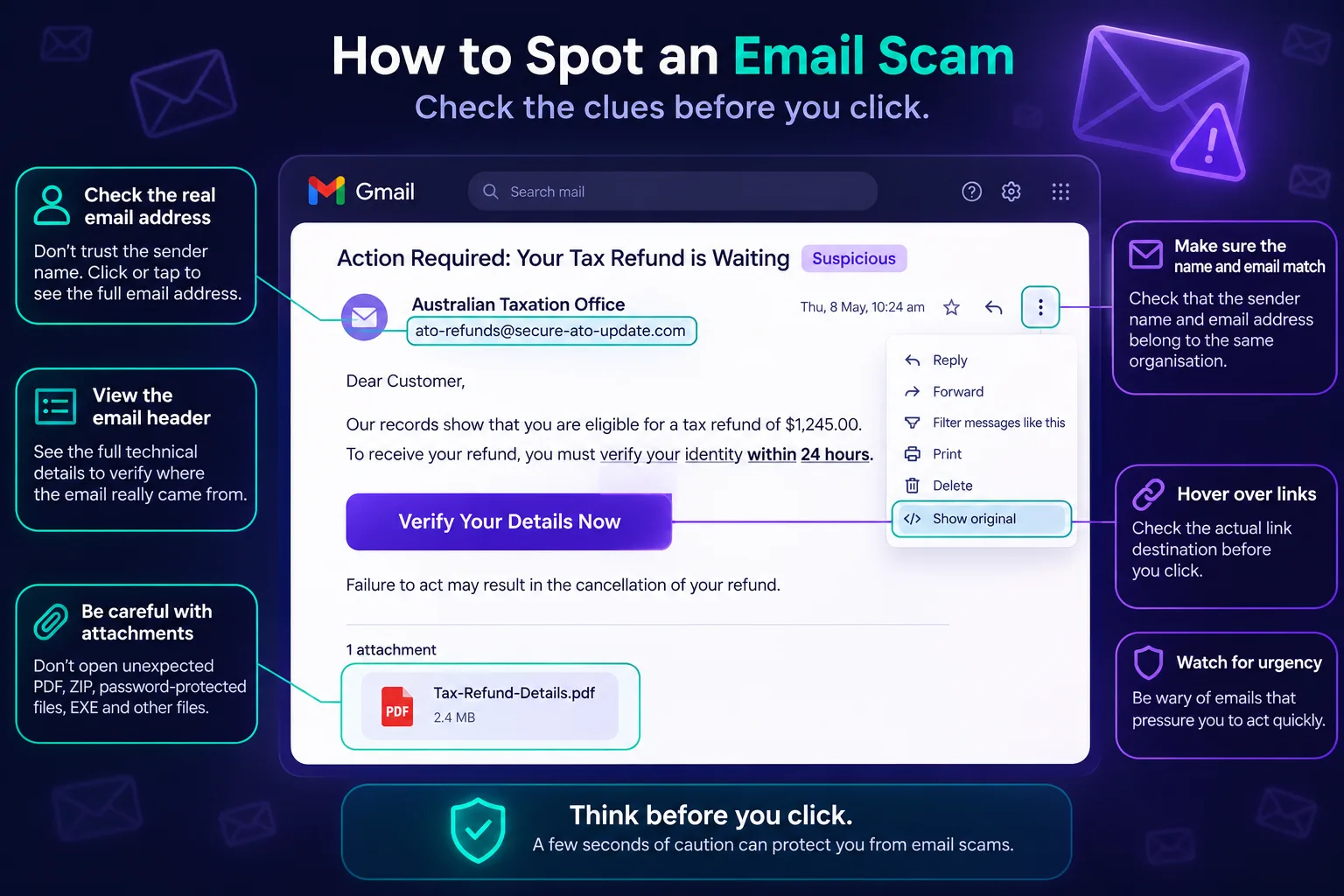
- You receive an email with:
- “Updated bank details”
- “Urgent payment request”
- Often targets businesses and freelancers
Real-life case:
The Hindu reported cases where businesses paid fake invoices after receiving emails with altered bank details.
👉 Always double-check payment links and verify them using your URL Checker before transferring money.
d. Fake App / UPI Scams
How it works:
- You are asked to download an app for verification or payments
- The app looks real but is malicious
👉 Before installing any app, check it using your Google Play App Checker tool.
🚩 Red Flags to Watch Out For
Stop immediately if you notice:
- Urgency: “Act now or your account will be blocked”
- Pressure: “Don’t tell anyone”
- New or changed bank details
- Guaranteed or unrealistic returns
- Requests to move conversation to WhatsApp/ Telegram
👉 If something feels off, verify the message or link using your scam detection tools before taking action.
What To Do If You’ve Sent Money to a Scammer
If you’re searching: “I sent money to scammer can I get it back” — act fast. If you feel you have been scammed in such a way and want to get your money back, read this blog further.
1. Contact Your Bank Immediately
- Request a transaction freeze or reversal
2. Report to Cybercrime
- In India: call 1930 or file a complaint online on www.cybercrime.gov.in
3. Inform the Payment Platform
- UPI apps or banks may help track the transaction
4. Save All Evidence
- Messages, links, screenshots, transaction IDs
👉 You can also review the message, link, or app involved using your tools to understand how the scam happened.
Don’t Guess. Verify Before You Pay.
Scammers rely on panic and trust.
✔ Check suspicious messages using your Message Checker
✔ Scan links using your URL Checker
✔ Verify apps using your Google Play App Checker
👉 Use these tools before sending money—it takes less than 30 seconds and can save you thousands.
Common Questions about Authorised Push Payment scams
What is an authorised push payment scam?
It’s a scam where you authorize the payment yourself, but are tricked into doing so.
Can I get my money back from an APP scam?
Sometimes. Contact your bank immediately—faster action improves your chances. There are many steps you can take and if you are in India, you can refer to these steps.
Is UPI fraud an APP scam?
Yes. Most UPI authorized payment scams are a type of APP scam because the user approves the payment.
What should I do after sending money to a scammer?
- Contact your bank
- Report to cybercrime authorities in your country
- Save proof
- Try reversal
How can I check if a payment link or message is a scam?
Before clicking or paying, use a trusted tool to scan links, verify messages, or check app safety. This helps detect fraud early. One such is available on our Free Tools page.
Final Thought
APP scams are dangerous because they don’t break systems — they break trust.
The best defense?
👉 Pause, verify, and then pay.
Related Reading
UPI Scam Alert: Fake Payment Links and Collect Requests Explained