
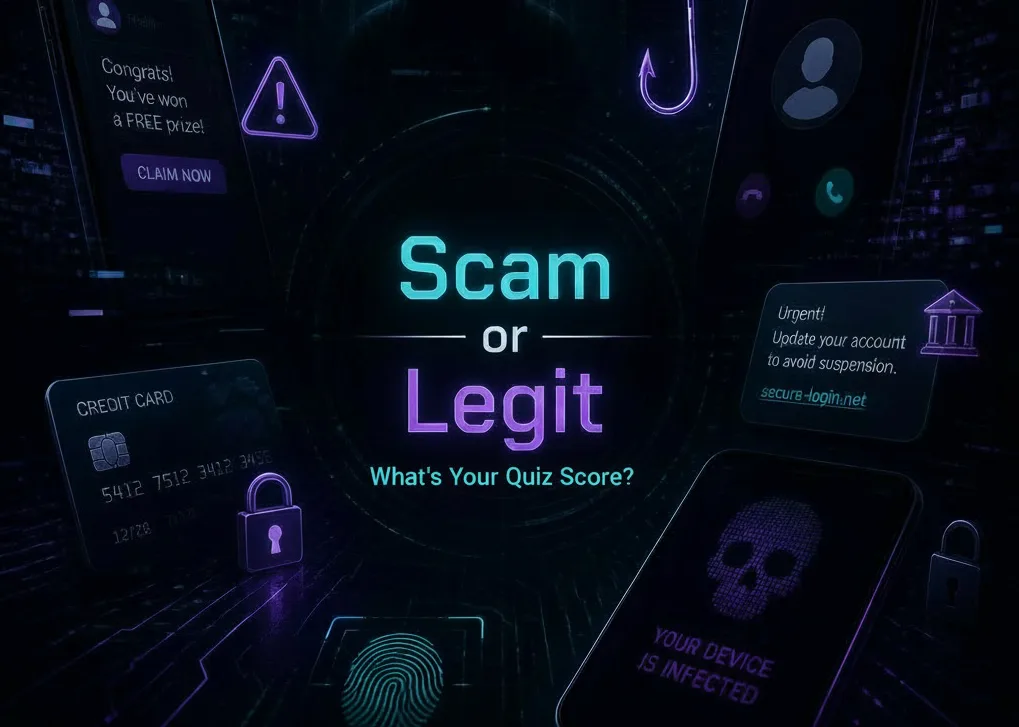
Scam or Legit?
Can you spot the scam before it’s too late?
Take 10 real-world scam scenarios and test yourself.
Online scams are getting smarter every day — from fake delivery messages and job offers to phishing links and APK malware. This interactive scam quiz helps you test your scam detection skills using real examples based on actual scam reports. Learn to identify phishing, fraud, impersonation, and malware before they catch you off guard.
Scammers use urgency, fear, curiosity, and trust to manipulate victims. If you’re unsure about a suspicious message, app, or website, Phishbowl helps you analyze it before you act.
Free Website Safety & URL Checker
Detect Phishing, Malware, Threats & Scams in any link, URL and website before clicking it.
Free Google Play App Check
Scan apps for risks, permissions, and potentials scams before downloading an App from Google Play Store
Check Messages for scams
Check message content for scams. Paste suspicious message to check if it is a scam of phishing attempt
SPONSORED
FAQs
1. How can I identify a scam message?
Look for urgency, threats, suspicious links, poor grammar, unexpected attachments, and requests for money, OTPs, or personal details.
2. What is phishing?
Phishing is a scam where attackers impersonate trusted brands, banks, or services to steal your passwords, card details, or sensitive information.
3. How do scam quizzes help?
Scam quizzes train you to recognize common scam patterns like fake delivery alerts, job scams, phishing links, and impersonation attempts.
4. Are APK files safe to install?
Only if downloaded from trusted sources like official app stores. APKs from unknown senders can contain malware or spyware and are often used my scammers to steal your personal and financial information.
5. Can scammers fake bank messages?
Yes. Scammers often imitate bank alerts, KYC notices, and payment failures to create urgency and trick users into clicking malicious links.
6. What should I do if I clicked a scam link?
Stop immediately, do not enter any information, run a URL scan, change passwords if needed, and monitor your accounts for suspicious activity.
7. Are WhatsApp job offers usually scams?
Not always, but unsolicited offers promising easy money, remote work, or payment for simple tasks are often scams.
8. Can scammers send legitimate-looking delivery messages?
Yes. Fake parcel delivery scams often mimic real courier companies and use tracking IDs or shortened links to appear genuine.
9. How can I check if an app is safe?
Review permissions, developer history, downloads, reviews, and use an app scanner like Phishbowl’s Google Play App Checker before installing from Google Play Store.
10. What are the most common scams in India?
Common scams include UPI fraud, fake KYC updates, electricity bill scams, parcel scams, APK malware, job scams, digital arrest and investment fraud.