Clicked a payment link and lost money? You’re not alone.
With the rapid rise of UPI apps like Google Pay and PhonePe, digital payments have become effortless—but UPI scams have grown just as fast.
From fake links to collect requests, a single mistake can cost you money.
How It Works
1. Fake Payment Link Scam
In this type of fake payment link scam, you receive a link via SMS, WhatsApp, or email claiming:
- “You’ve won a reward”
- “Refund pending”
- “Payment request from buyer”
These scams often appear in everyday situations, such as:
- Fake courier or delivery updates (“Your package is on hold – pay to release”) often sent through SMS
- Messages pretending to be from postal services
- Subscription or KYC update links
Once clicked, the link leads to a fake page that tricks you into entering your UPI PIN—resulting in an instant payment to the scammer.
2. UPI Collect Request Scam
The “upi collect request scam” is one of the most common tactics today.
It frequently happens on platforms like:
Typical scenarios:
- You’re selling something, and a buyer says “I’ve sent payment—please accept”
- You’re renting an apartment, and someone asks you to “confirm booking”
But in reality, you are authorizing a payment, not receiving one.
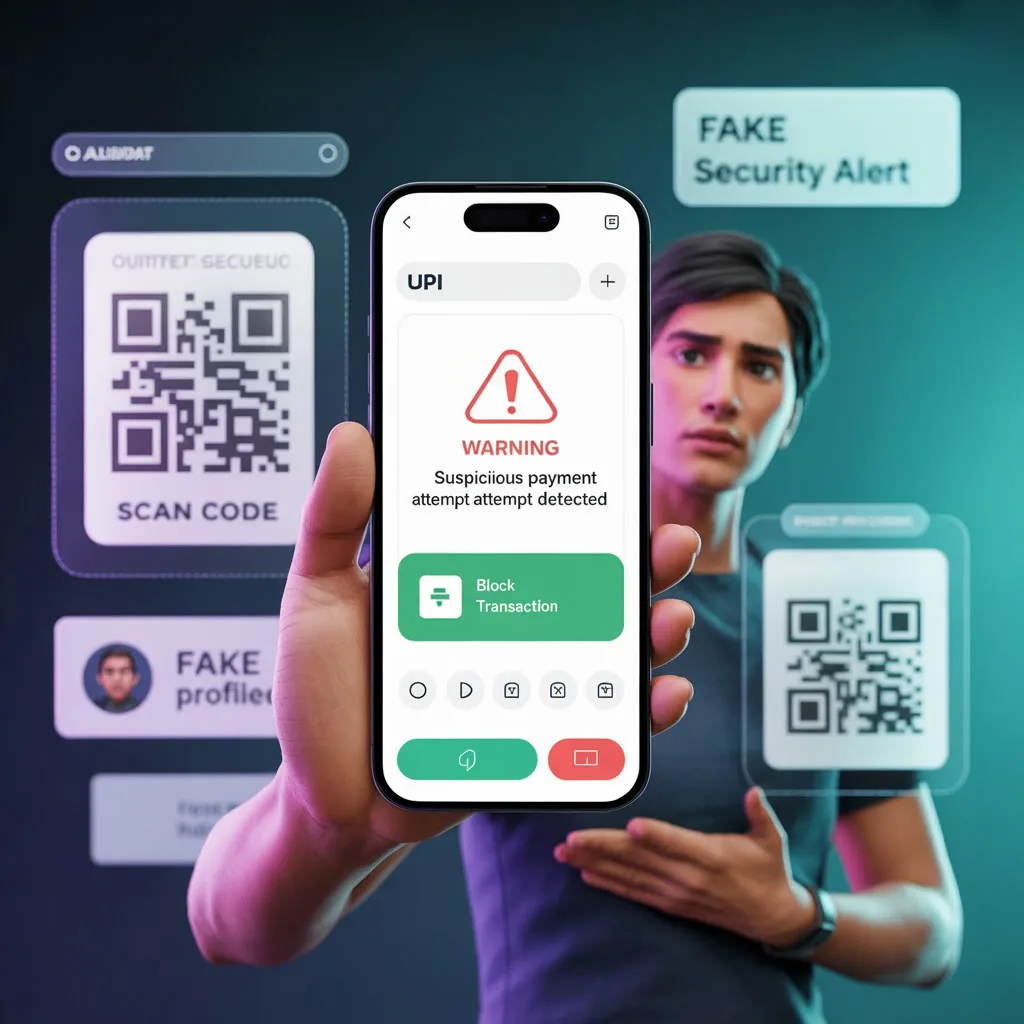
3. QR Code Fraud
Another common UPI scam in India involves QR codes.
What to watch out for:
Some QR codes—especially from unknown individuals or even small businesses—may have a pre-filled amount.
- The payment screen may already show ₹2,500 / ₹5,000, etc.
- Users often miss this and approve the payment in a hurry
Always double-check the amount before entering your UPI PIN, even when paying via a QR code.
Also use a QR Check safety readers to check what’s behind a QR code if you are not expecting a payment QR. You can download the Phishbowl App from Google Play or App Store. Links are available on our homepage: https://phishbowl.in.
Red Flags to Watch Out For
- Message says “receive money” but asks you to pay
- Unknown sender or suspicious request
- Urgent language like “Act now” or “Limited time”
- Asked to enter UPI PIN to “receive” money
How to verify if a UPI payment request is genuine
Before accepting any UPI collect request:
- Check whether the request says Pay or Receive
- Verify the sender’s UPI ID carefully
- Confirm directly with the sender through a trusted number
- Check the amount before approving
- Never enter your UPI PIN to receive money
- Avoid rushed decisions under pressure
What To Do If You Receive a Suspicious Request
- ❌ Do NOT click unknown payment links
- ❌ Never enter your UPI PIN to receive money
- ✅ Verify the sender through a trusted source
- ✅ Decline unknown collect requests
- ✅ Report the issue in your UPI app
- ✅ Contact your bank if needed
Before clicking any random payment link:
Paste the payment link into our URL checker to verify if it’s safe.
Why UPI scams are so effective
UPI scams are effective because they exploit speed, trust, and confusion around how digital payments work. Many people assume that every payment request means money is coming in, when in reality some requests authorise money going out of their account.
Scammers often take advantage of the fact that UPI transactions happen instantly and users may act quickly without carefully reading the payment prompt. They create pressure by making the situation seem urgent or important, increasing the chances of mistakes.
Common tactics scammers use include:
- Urgency and fear — claiming your account will be blocked, a bill is overdue, or a payment must be completed immediately.
- Fake authority — pretending to be bank staff, customer support, government officials, or trusted companies.
- Confusion over collect requests — sending a payment request while claiming you need to “accept” it to receive money.
- Fake screenshots and payment proofs — showing edited or fabricated payment confirmations to build trust.
- Fake support staff or buyer scams — posing as buyers, delivery agents, or technical support to trick victims into approving payments.
- Social engineering — manipulating emotions like fear, urgency, greed, or trust to influence quick decisions.
Understanding how these scams work can help you recognise warning signs early and avoid financial fraud. Always read payment requests carefully and remember: you never need to enter your UPI PIN to receive money.
Common questions about UPI Payments and UPI scams
Can someone hack me through UPI?
No, UPI itself is secure. Most scams happen when users are tricked into approving payments or entering their UPI PIN.
Is it safe to scan unknown QR codes?
No. QR codes are meant for making payments. Always verify the source and check the amount before proceeding. You can also check and verify QR Codes through the Phishbowl app.
What is a UPI collect request?
A UPI collect request is a payment request where someone asks you to approve a transaction. Once approved, money is debited from your account, not credited.
Do I need to enter my UPI PIN to receive money?
No. You never need to enter your UPI PIN to receive money.
If you’re asked to do so, it’s likely a scam.
Can I get my money back after a UPI scam?
It depends on how quickly you act. Immediately report the transaction in your UPI app and inform your bank. You can also file a complaint on the National Payments Corporation of India portal.
How do I report a UPI fraud in India?
You can:
- Immediately call your bank
- Raise dispute inside UPI app
- File cybercrime complaint – Dial 1930 (India’s cyber fraud helpline) or visit www.cybercrime.gov.in
- Change passwords if any credentials were shared
- Monitor linked bank accounts
Related Reading
Digital Arrest Scams in India: What It Is and How Scammers Threaten Victims
WhatsApp Investment Scam: Fake Stock Groups promising 30-50% Returns
UPI vs Zelle Security: How these P2P Payment Systems are Worlds Apart