
Check if a Link is Safe Instantly
Free URL Checker Tool – Scan any link for phishing, malware, threats or scams
Not sure if a link is safe or a scam? Use our free URL checker to check websites, links and urls for phishing, malware, and fraud risks instantly. Simply paste a link to analyze whether it’s safe to open, share, or interact with — no registration required. This tool helps you detect suspicious and fake links from WhatsApp, SMS, emails, or unknown sources before you click.
📋 Paste a link below to check if it’s safe or a scam
Example: https://example-scam-url.com/xyz (please include http or https)
✅ Free to use (Limited) | ⚡ Instant results | 🔒 No signup required
Thousands of users check suspicious links and websites daily using this tool
SPONSORED
How to check if a URL or Link is safe
Step 1: Copy the suspicious URL you received in WhatsApp, SMS, email, or social media including ‘http’ or ‘https’.
Step 2: Paste it into the URL checker tool above.
Step 3: Click Check to analyze the link for phishing, malware, reputation risks, and suspicious patterns.
Step 4: Review the results carefully to check if the link is safe for all the sections before opening or sharing the link.
Step 5: If the link is risky, delete it and avoid interacting with it. Delete the message you received as well for your safety.
How to understand your URL scan results
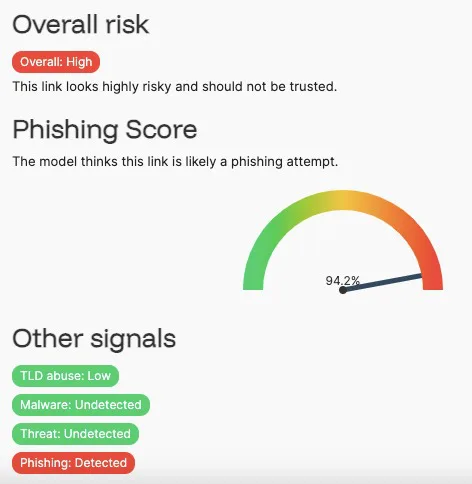
The URL checker analyses the link using multiple security checks and gives you an overall safety assessment on top, along with a breakdown of individual risk factors to help you make a safer decision before clicking.
Phishing Score
Our URL Checker AI assesses the link and shows how likely the URL or link is to be a phishing attempt.
Malware Detection
Checks if the URL has been linked to any known malware in the recent past.
Threat Intelligence
Checks against known security and threat databases and blacklists and lets you know if it is listed.
TLD Abuse
Some domain extensions are abused more often in scams. This signal helps identify risky patterns and steer clear of them.
Phishing
Checks if the link has been detected in any phishing database.
Sample Result
Limitations of URL safety scanners
No URL scanner can guarantee 100% safety.
This tool may not detect:
- Extremely newly created phishing sites
- Private malware delivery links
- Links hidden behind multiple redirects and shortened URLs
- Social engineering scams where the website itself appears legitimate
Always use caution even if a link appears safe.
Why checking if a link is safe matters
Suspicious links are one of the most common ways scammers trick people into giving away personal information, sending money, or downloading harmful software. Many scam links are designed to look legitimate and can be shared through WhatsApp, SMS, emails, social media, or fake advertisements. Checking a link before clicking can help you identify potential risks and avoid becoming a victim of online fraud.
Phishing links can:
- Steal passwords by taking you to fake login pages that look like your bank, email provider, or social media account.
- Steal OTPs and verification codes by pretending to be customer support or payment verification pages.
- Install malware or spyware on your device, which can monitor activity, steal data, or damage your system.
- Redirect to fake payment pages that trick you into sending money or sharing card details.
- Trick users into downloading malicious APK files disguised as banking apps, courier updates, or utility bill apps.
- Steal personal and financial information such as identity details, banking credentials, card information, account logins, or verification codes that can be misused for fraud or identity theft.
Scammers often use urgency, fear, and fake authority to make people act quickly without thinking. Common examples include fake bank alerts, courier delivery issues, refund claims, job offers, and payment requests. Taking a few seconds to scan a suspicious link can help protect your money, personal data, and devices.
Download Phishbowl and get the full suite of AI-powered scam protection beyond just URL or link checking.
Common Questions About Checking If a Link is Safe
When should you use the Free Website Safety and URL Checker?
Use This Tool if:
- You received a suspicious WhatsApp or SMS link. You can also check if the message itself is safe or a scam by using the Free Message Scam Checker
- You’re unsure about a website before making a payment through a UPI link or a payment link
- You want to avoid phishing or fake websites
- You’re checking a job, banking, or login link
- You received a suspicious payment or courier tracking link
- You received a link ending in .apk to make a utility bill payment and want to check it
- Someone sent you a WhatsApp link and you want to check if it’s safe
What Is a Website Safety & URL Checker?
A website safety and URL checker is a tool that analyses URLs and websites to detect potential security risks such as malware infections, phishing pages, scam sites, and unsafe redirects so you know if an unknown link is safe to open. Our URL checker is a scam link checker that combines threat intelligence and reputation analysis to help users make informed decisions before visiting or sharing a link.
Common Scams People Check for
- Delivery scams and Courier scams (Delhivery, FedEx, Amazon, Flipkart such as “Your parcel could not be delivered, click here to reschedule”)
- UPI Payment Requests or Fake UPI Links (Ex: Scan this link to receive your money)
- KYC Update messages with phishing links (Ex: “Your account will be blocked today, update your KYC, click this link”)
- Fake investment app download links (Ex: “Users have earned 50%+ returns, join today and earn…click this link to join”)
What We Scan For
We check if the a URL is safe from the following aspects:
- Malware
- Threat Intelligence
- Phishing
- Top Level Domain (TLD) Abuse
- Reputation
How Our Website Safety and URL Checker Works
When you submit a URL, the url scanner scans the website or url using multiple security checks and threat and phishing databases. The scan evaluates the website’s reputation and potential risks, then provides an assessment on four key factors and an overall safety assessment to help you decide whether the site can be trusted.
What if I have received a URL or a Link in a Message?
You can either scan just the URL / Link from the message using this tool or you can use the Message Checker to scan the entire contents of the message for scams and/ or fraud.
Can a QR Code contain a suspicious link?
Yes a QR Code can also contain a suspicious link and you can use Phishbowl’s QR Code Safety Checker to find out what’s behind the QR Code and if it is safe. If there is a link, you can analyze it using the URL Checker above.
Related Guides
- UPI Scam Alert: Fake Payment Links and Collect Requests Explained
- Authorised Push Payment Scam: How Payment Fraud Tricks People into Sending Money
🕵️ Scam Fighters do accept tips.

If you found this useful, drop a little love in the tipping jar ❤️
It helps us keep these tools free for everyone.
Either way, we like you. 😉