Buying tickets online has become normal for concerts, cricket matches, festivals, comedy shows, and other high-demand events. Unfortunately, scammers know this — and fake ticket scams are becoming increasingly common across social media, messaging apps, resale groups, and fake booking websites.
In many cases, fans are not only competing with other buyers. They are also competing with automated ticket booking bots that can purchase large numbers of tickets within seconds, contributing to inflated resale prices and artificial scarcity online.
These scams often create urgency by claiming tickets are “almost sold out” or available only through private resale. In reality, the ticket may be fake, duplicated, or may never exist at all.
This guide explains how online ticket scams work, where they usually begin, and what warning signs to look for before sending money.
Why Ticket Scams Are Increasing
Scammers target events with strong demand and limited availability.
This commonly includes:
- concerts
- cricket matches
- music festivals
- stand-up comedy events
- sporting finals
- international tours
When official tickets sell out, many people turn to resale offers on Instagram, WhatsApp, Telegram, Facebook Marketplace, or unofficial ticketing websites.
That urgency creates the perfect environment for fraud.
Many fake concert tickets and cricket match ticket scams now circulate through social media resale groups and unofficial websites where buyers are pressured to act quickly before “tickets disappear.”
In many high-demand events, ticket availability is also affected by automated ticket booking bots. These bots can purchase large numbers of tickets within seconds and contribute to inflated resale prices on unofficial platforms and social media groups. If you want to understand how these systems work, you can also read more about how ticket booking bots operate.
Many victims only realise the scam when:
- the ticket QR code fails at entry
- customer support disappears
- the seller blocks them
- the ticket was sold to multiple people
Where Online Ticket Scams Usually Start
Most ticket scams begin outside official ticketing platforms.
A person may see:
- a social media post advertising “last few tickets”
- an Instagram story offering resale tickets
- a Telegram or WhatsApp group for event resale
- a sponsored ad for a fake ticketing website
- a comment section claiming someone has extra tickets available
In many cases, the seller appears genuine. Some scammers even use hacked or aged social media accounts to look trustworthy.
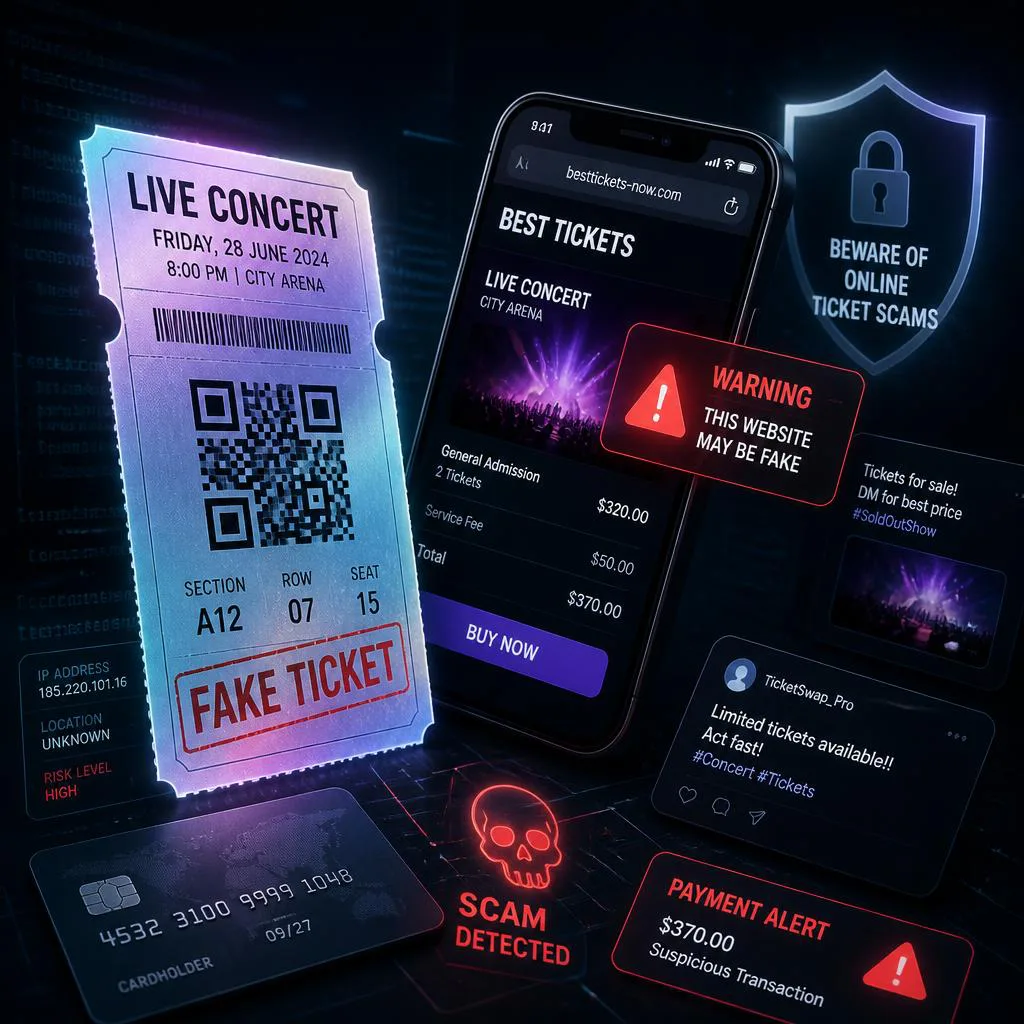
Others create fake ticket-booking websites that closely imitate real platforms using similar logos, colours, and layouts.
Fake Ticket Websites
One of the most common ticket scams involves fake booking websites.
These websites are designed to look professional and may:
- copy branding from real ticketing companies
- show fake seat availability
- display countdown timers
- offer discounted “exclusive” tickets
- collect payment without issuing real tickets
Some sites send fake PDF confirmations or screenshots to make the purchase appear legitimate.
A common trick is using domain names that look almost identical to official ticketing websites, with only small spelling changes.
Before entering payment details, it’s important to verify that the website is genuine and not a fake or phishing page. If a ticket link was shared through a message or social media post, using a url or website safety checker can help identify suspicious or impersonation domains before you pay.
SPONSORED
Social Media Ticket Resale Scams
Resale scams have become especially common on Instagram, Facebook Marketplace, Telegram, and WhatsApp groups.
The scam usually begins with a seller claiming they can no longer attend an event and are willing to sell tickets quickly. To appear trustworthy, they may send screenshots of tickets, email confirmations, booking receipts, ID photos, or videos scrolling through the ticket app.
The problem is that screenshots and PDFs can be edited easily.
In many cases:
- the ticket is fake
- the QR code has already been used
- the same ticket is sold to multiple people
In some situations, resale prices become even more extreme because scalper bots create artificial scarcity by purchasing tickets in bulk the moment sales open.
Some scammers ask for a small “booking deposit” first and then disappear after receiving payment. Others continue the conversation until the last moment before blocking the buyer entirely.
Fake Customer Support Scams
Another growing scam involves fake customer support accounts.
After searching online for ticket help, users may accidentally contact fake support numbers or social media accounts pretending to represent ticketing companies.
The scammer may claim:
- your ticket booking failed
- your payment is stuck
- you need to “verify” your booking
- a refund is pending
Victims are then asked to:
- share OTPs
- provide card details
- install apps
- click verification links
- make additional payments
Many fake support scams begin through sponsored ads or fake search results.
Always contact ticketing companies using contact details listed on their official website — not numbers found in comments, forwarded messages, or random search results.
QR Code and Screenshot Ticket Fraud
Many people assume that seeing a QR code means the ticket is genuine. Unfortunately, that is no longer true.
Scammers frequently:
- duplicate QR codes
- reuse old tickets
- edit screenshots
- send fake PDFs
- sell the same ticket to multiple buyers
In some cases, the ticket scans correctly at first glance but has already been used by someone else earlier.
A screenshot alone is not proof that a ticket is valid.
Ticket Scams Through WhatsApp and Messages
Many ticket scams spread through direct messages because they feel more personal and trustworthy.
A victim may receive:
- a forwarded resale offer
- a “friend of a friend” recommendation
- a Telegram resale invitation
- a message claiming tickets are selling out quickly
These messages often create urgency or emotional pressure:
“Need to sell immediately.”
“Only two tickets left.”
“Payment first because many buyers are waiting.”
If the offer arrived through WhatsApp, Telegram, SMS, or Instagram DM, the wording of the message itself can sometimes reveal scam patterns such as urgency, pressure tactics, or unrealistic discounts.
In situations like this, analysing suspicious messages with a message scam checker can help identify common fraud signals before responding or making payment.
APK Files and Fake Ticket Apps
Some ticket scams now involve APK files being shared directly through chat apps.
The scammer may claim:
- the official app is unavailable
- the ticket must be viewed in a “special app”
- you need a separate verification app
- the APK is required for ticket transfer
APK files bypass the normal review process of the Google Play Store and can install malicious software onto your device.
These apps may attempt to:
- steal passwords
- access SMS OTPs
- capture banking information
- take control of the device
A safe rule is simple:
Never install APK files sent through messages for ticket bookings or transfers.
Red Flags to Watch For
While every scam is different, many fake ticket offers share common warning signs.
Be cautious if:
- the seller insists on immediate payment
- prices are unusually cheap for a sold-out event
- communication happens only through messaging apps
- the seller refuses secure payment methods
- the website domain looks unusual
- there is pressure to “book quickly”
- screenshots are used instead of transferable tickets
- customer support asks for OTPs or remote access
One warning sign alone may not confirm a scam, but several together should increase caution.
How to Protect Yourself Before Buying Tickets
The safest approach is to purchase tickets directly from official ticketing platforms whenever possible.
If buying resale tickets:
- verify the seller independently
- avoid rushed payments
- use secure payment methods
- confirm the ticket transfer process
- double-check website domains carefully
If the deal came through a message or social media post, pause before acting quickly. Most ticket scams rely on urgency and excitement.
If you are interested in understanding how ticket scalping bots contribute to black market ticket sales and inflated resale pricing, you can also read our guide on ticket booking bots and online ticket reselling scams.
What To Do If You Think You’ve Been Scammed
If you suspect a fake ticket scam:
- stop sending additional money
- preserve screenshots and chat history
- save payment receipts
- report the account or website to cybercrime authorities in your country
- contact your bank immediately if payment was made
- change passwords if suspicious links or apps were used
Quick reporting may improve the chance of limiting further financial damage.
Frequently Asked Questions
How do fake ticket scams usually work?
Most fake ticket scams involve counterfeit tickets, duplicate QR codes, fake booking websites, or sellers who disappear after receiving payment.
Are screenshots of tickets safe proof?
No. Screenshots can be edited, reused, or duplicated. A screenshot alone does not guarantee the ticket is genuine.
Are ticket resale offers on Instagram or WhatsApp risky?
They can be. Many scams begin through social media or messaging apps because they create urgency and a false sense of trust.
Can fake ticket websites look legitimate?
Yes. Many fake ticket websites closely imitate real ticketing platforms using similar branding and lookalike domain names.
Are APK ticket apps dangerous?
APK files shared through chat apps can install malicious software and should be treated cautiously unless independently verified.
What should I do before paying for resale tickets?
Verify the seller, confirm the ticket transfer process, avoid rushed payments, and carefully check the website or platform being used.